
How To Grow Your Own Edible Garden in Brisbane
If you’ve ever stepped outside in a Brisbane summer, you’ll know, gardening here isn’t for the weak. The heat, the humidity, the sudden downpours. It can be a lot. The good news, though? If you work with our climate conditions, they make it one of the best places to grow your own edible garden.
Step one, start with the right spot in your garden.
Before you plant anything, really look at the space you have. Edible gardens need plenty of sunlight, roughly 6 to 8 sunny hours a day is ideal. Morning sun is especially valuable as it’s more gentle than the harsh afternoon heat, which can be intense.
If your yard gets harsh western sun, consider a bit of shade protection like shade cloth or something thin and light that doesn’t block all the sun. You just want to block enough sun to keep your plants from getting scorched.
Step two, build soil that works for you.
Our soil can be a bit hit-or-miss, often sandy or low in nutrients. You’ll need to add necessary nutrients to the soil to make it as close to loam as you can get. The secret to a thriving edible garden is improving your soil from day one.
Step three, mix in compost, organic matter, and a good-quality mulch.
These help your soil to retain moisture, improve soil structure, and feed your plants naturally, from the soil you’ve pumped full of nutrition
Your soil is the foundation of your garden. If you can get this right, everything else becomes easier.
Step four, choose plants that thrive in the area.
This is where a lot of people go wrong, as they go to a nursery and snap up all the delicious-looking fruit and veggies without thinking about the space or weather they need to grow and thrive. Not every veggie loves Brisbane’s subtropical climate.
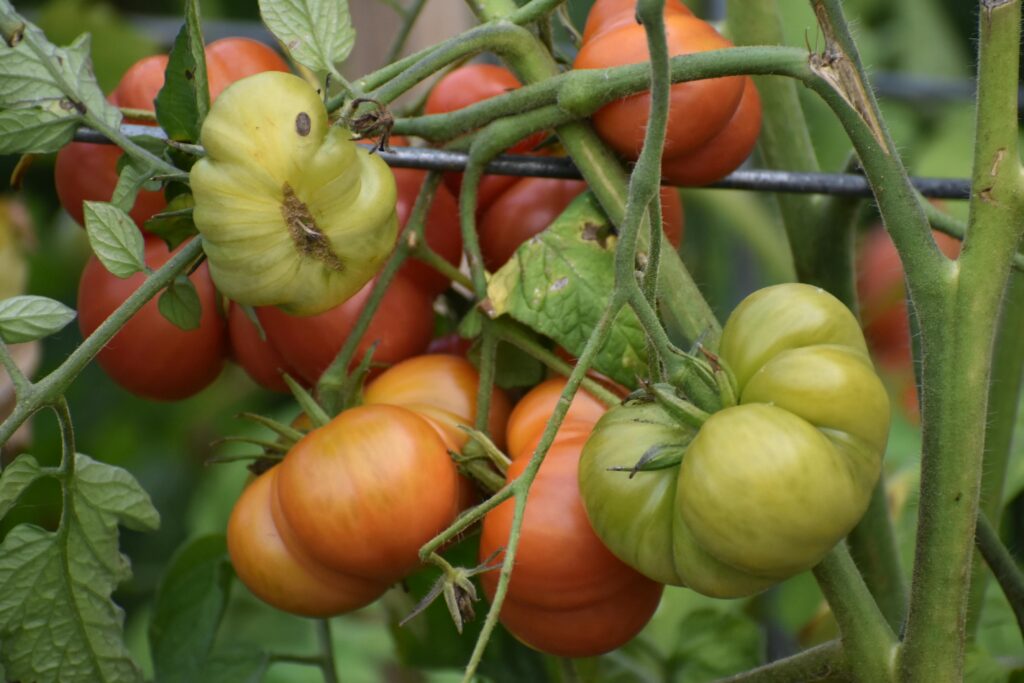
Focus on food that enjoys or requires a wet heat, like tomatoes, chillies, and eggplant, herbs like basil, mint, and lemongrass, and leafy greens like spinach (especially in the cooler months).
Pro Tip:
Planting seasonally is key to success. Trying to grow cool-weather crops in peak summer will only lead to frustration and dead plants.
Step five, water smart, not more.
It can be tempting to overwater in the heat, but just because you’re thirsty doesn’t mean your plants are. More isn’t always better.
Water deeply, in the early morning or late afternoon, a few times a week rather than lightly every day. Early morning is best, as it reduces evaporation and gives plants a strong start before the heat kicks in.
Pro Tip:
Touch your soil, stick your finger in up to your knuckle, and your soil is dry and crumbly, time to water. If it’s damp, leave it be.
Step six, keep pests under control, naturally.
Warm climates mean pests. They’re just a part of nature, but obviously you’d like to keep at least some of your harvest for yourself. Don’t go straight for harsh chemicals, though, as you are growing food, and chemicals might permeate your crops.
For natural pest control, try companion planting like basil near tomatoes, neem oil or natural sprays, and encouraging beneficial insects.
A healthy garden usually balances itself out over time; you just need to give it the right start. Remember to start small, as it’s easy to get carried away, but starting small will give you a much better chance of success. A few raised beds or even pots on a patio can produce much more food than you’d expect, and you don’t need to split your focus.
There’s something genuinely satisfying about stepping outside and picking your own herbs or veggies, especially when you know exactly how they were grown.
In a climate like ours, an edible garden doesn’t have to be a pipe dream, with the right approach, it can thrive all year-round.
Need help or have any questions? Don’t hesitate to get in touch with Ecological Tree Services or call on 07 3520 8661.
-Alex the Arborist